
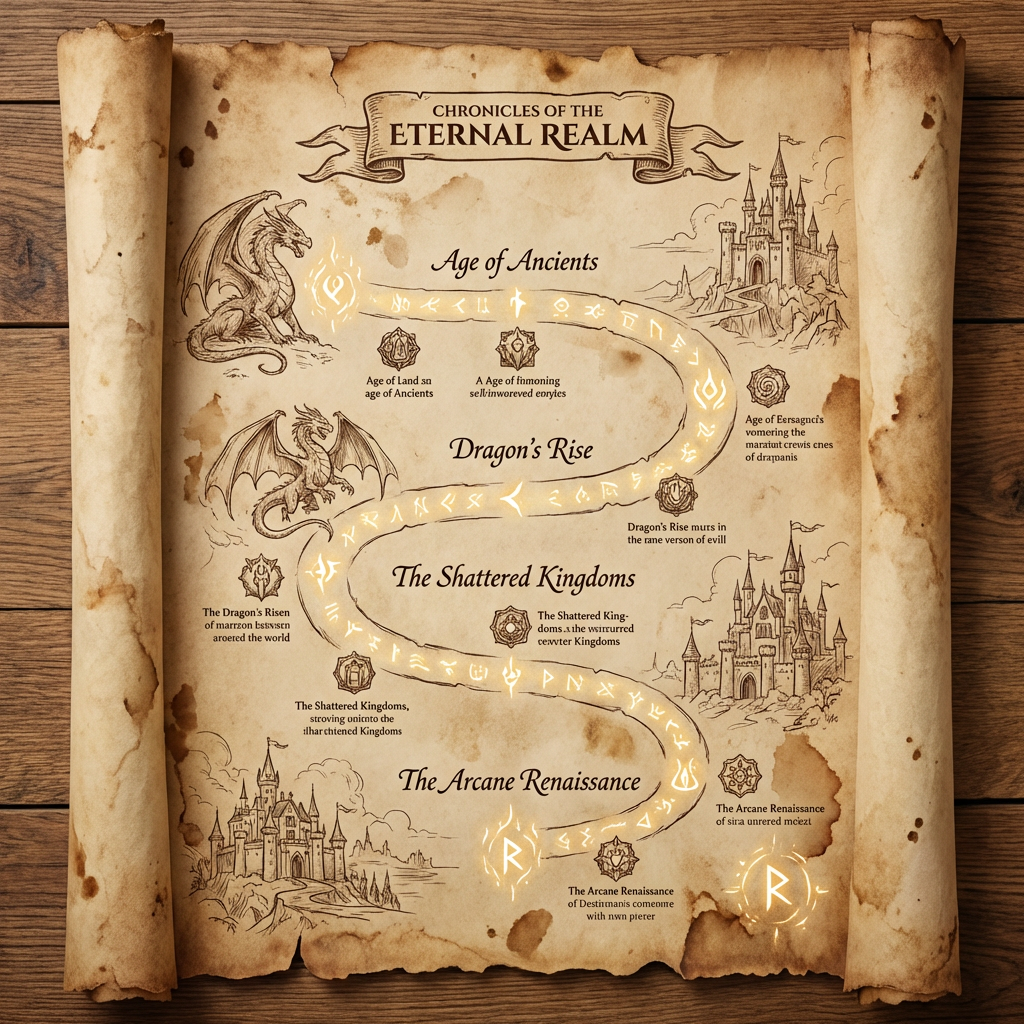

Fantasy stories often seem boundless. Entire worlds are created from nothing—new kingdoms, magical systems, ancient histories, and epic conflicts. Because of this scope, many writers eventually ask an important question:
Should I create a timeline of events for my fantasy world?
The quick answer is yes—creating a timeline can greatly enhance the structure, consistency, and realism of your story. While it might seem like extra effort during the worldbuilding stage, a timeline helps fantasy writers keep intricate narratives clear and believable.
Let’s examine why timelines are important and how they can enhance your storytelling.
Why Timelines Matter in Fantasy Writing
Fantasy worlds rarely begin when your story begins.
Most fictional worlds have centuries—or even thousands of years—of history behind them. Wars, dynasties, magical discoveries, migrations, and disasters all influence the present-day events of your story.
Without a timeline, it becomes very easy for writers to lose track of:
- Historical events
- Character ages
- Political changes
- Magical discoveries
- Major wars or disasters
A timeline serves as the backbone of your world’s history. It makes sure that every major event fits logically within your world.
For example, if a magical kingdom fell 500 years ago, your timeline helps you remember:
- When the fall occurred
- Who ruled at the time
- What caused the collapse
- How it affected modern characters
This level of consistency is what makes fantasy worlds feel real.
Timelines Help Prevent Plot Holes
One of the greatest risks in large fantasy stories is timeline inconsistency.
Without a clear timeline, writers might unintentionally cause issues such as:
- Characters who are the wrong age
- Wars that overlap incorrectly
- Technologies appearing too early
- Magical systems developing unrealistically
A timeline allows you to visualize cause and effect across your world’s history.
For example:
- A magical catastrophe happens in Year 400
- Refugees migrate in Year 405
- A new kingdom forms in Year 420
These connections enhance your worldbuilding and make events seem purposeful instead of accidental.
Timelines Improve Character Development
Timelines aren’t just about history—they also help with character arcs.
By mapping out events chronologically, you can track:
- Character births
- Training periods
- Political changes
- Relationships forming or breaking
- Major personal turning points
This helps characters grow naturally within the timeline of the world.
For instance, if a character trained as a sorcerer for ten years, the timeline ensures that their skills feel earned rather than sudden.
Epic Fantasy Especially Benefits from Timelines
The larger the world, the more valuable a timeline becomes.
Many epic fantasy stories include:
- Multiple kingdoms
- Ancient legends
- Generational conflicts
- Large casts of characters
- Political intrigue
In stories like these, a timeline acts almost like a historical record for your world.
It allows you to track events across multiple storylines without losing clarity.
This is especially useful if you’re planning to write a series of books where events might take place over years or decades.
How to Create a Fantasy Timeline
You don’t need complex software to create a useful timeline. Many writers simply use:
- A spreadsheet
- A notebook
- Scrivener
- Worldbuilding software
- A basic document
Start by listing the most important historical events in your world.
Example structure:
Year 0 — The Age of Creation begins
Year 213 — The First Dragon War
Year 487 — Founding of Greystar City
Year 932 — The Barrier of Greystar is formed
Year 1010 — Present-day story begins
From there, you can expand the timeline with smaller details and character milestones.
You Don’t Need a Perfect Timeline
One common mistake writers make is attempting to build a very detailed timeline before they start writing the story.
You don’t have to do that.
A timeline should evolve as your story grows.
Think of it as a living document—something that develops alongside your narrative.
Start simple. Add events as your world expands.
Final Thoughts
Creating a timeline might seem like extra work, but for fantasy writers, it is one of the most effective worldbuilding tools available.
A well-structured timeline can help you:
- Maintain historical consistency
- Avoid plot holes
- Develop characters naturally
- Build believable world history
- Manage large fantasy series
Ultimately, timelines enable writers to view their fictional worlds like historians view real ones—as dynamic histories influenced by cause and effect.
If you want your fantasy world to feel deep, immersive, and believable, creating a timeline is definitely worth the effort.
Leave a Reply